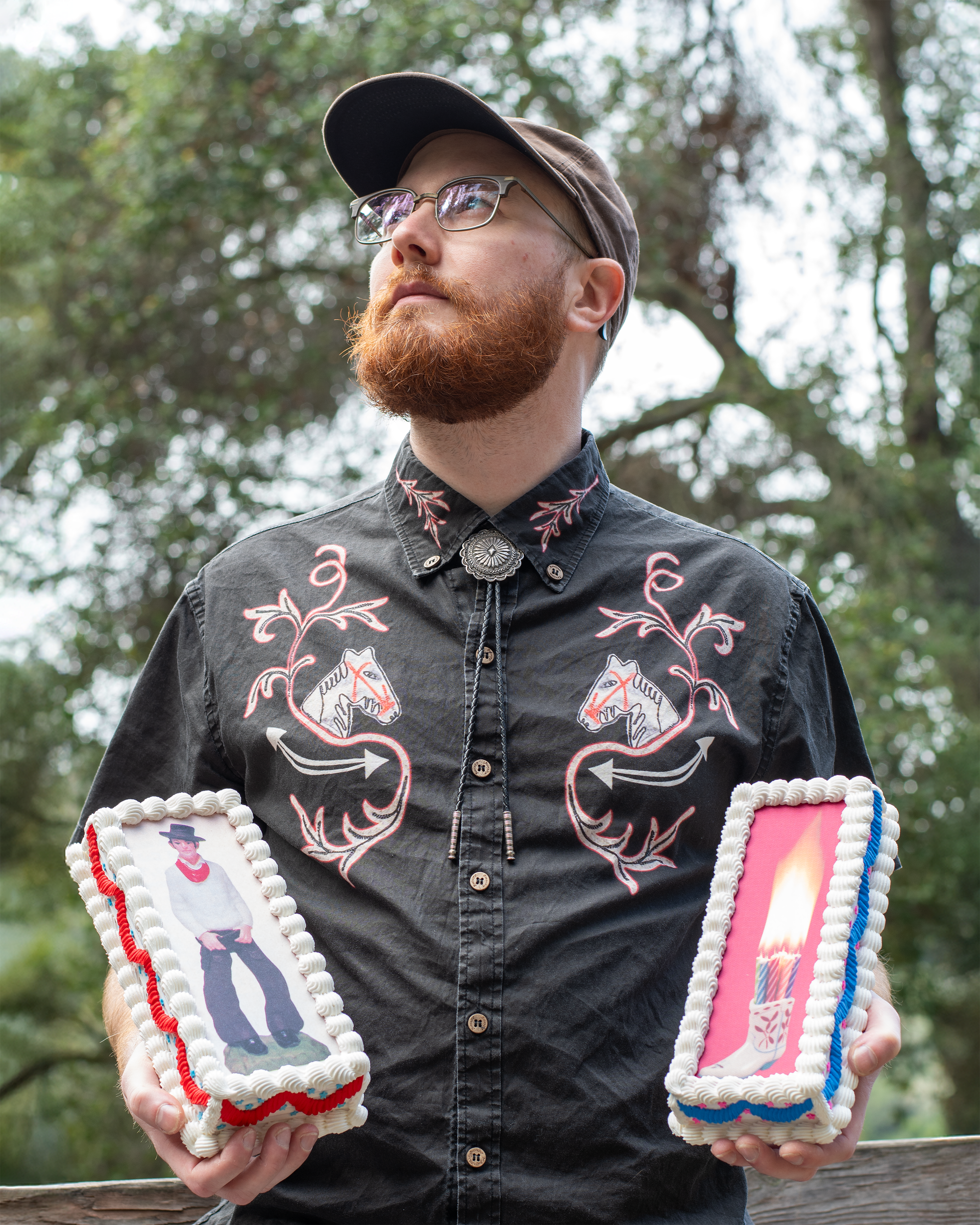
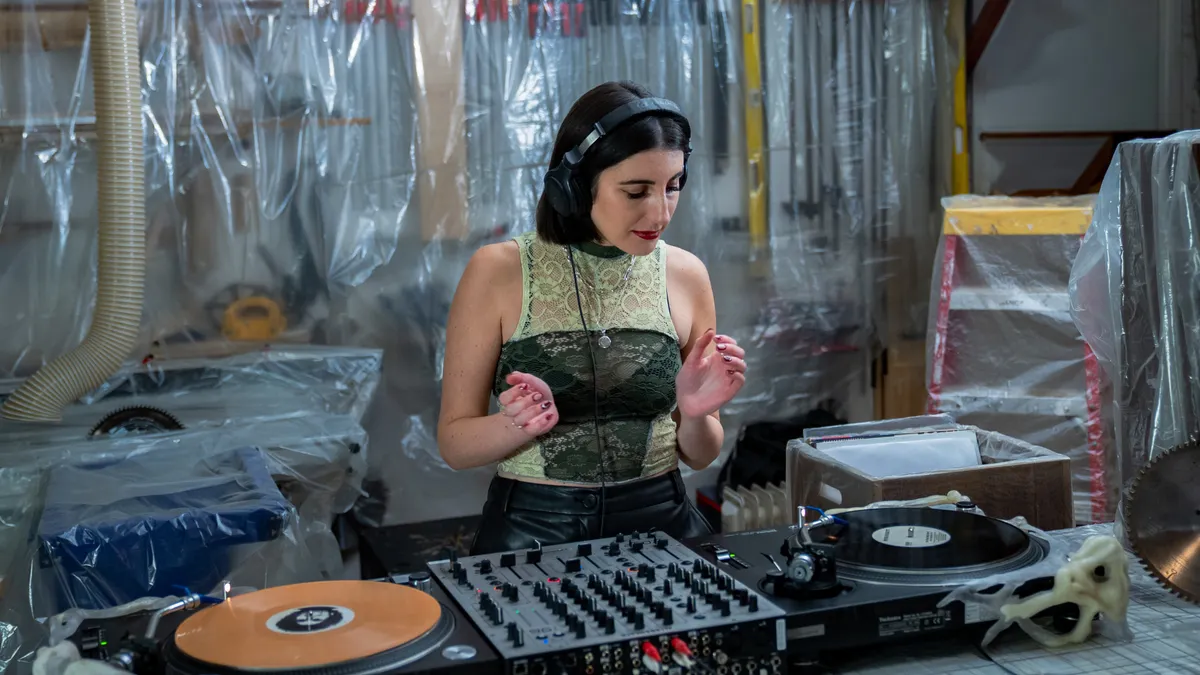
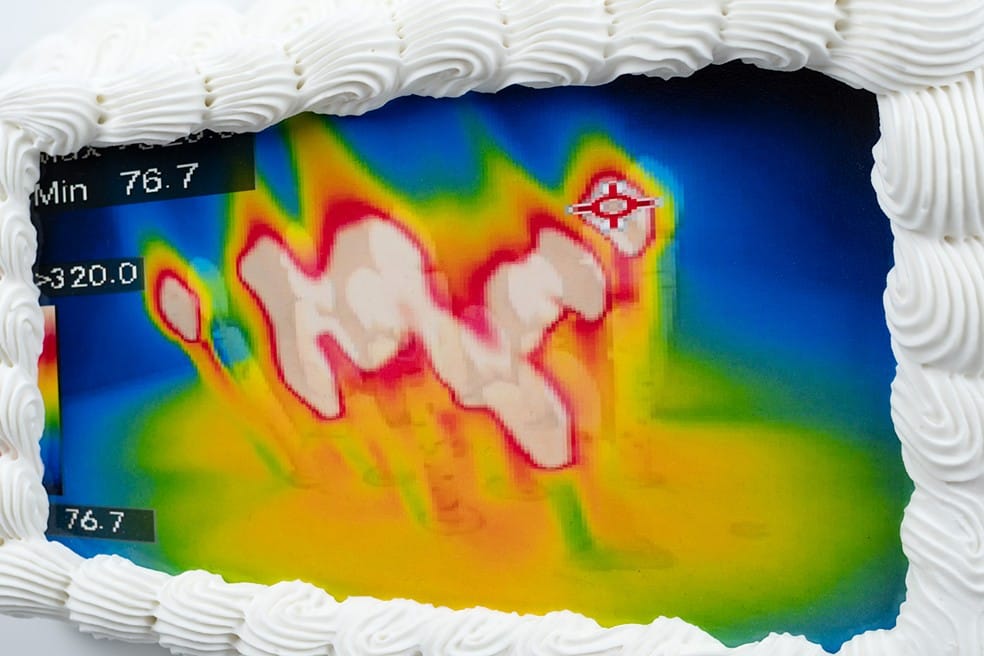
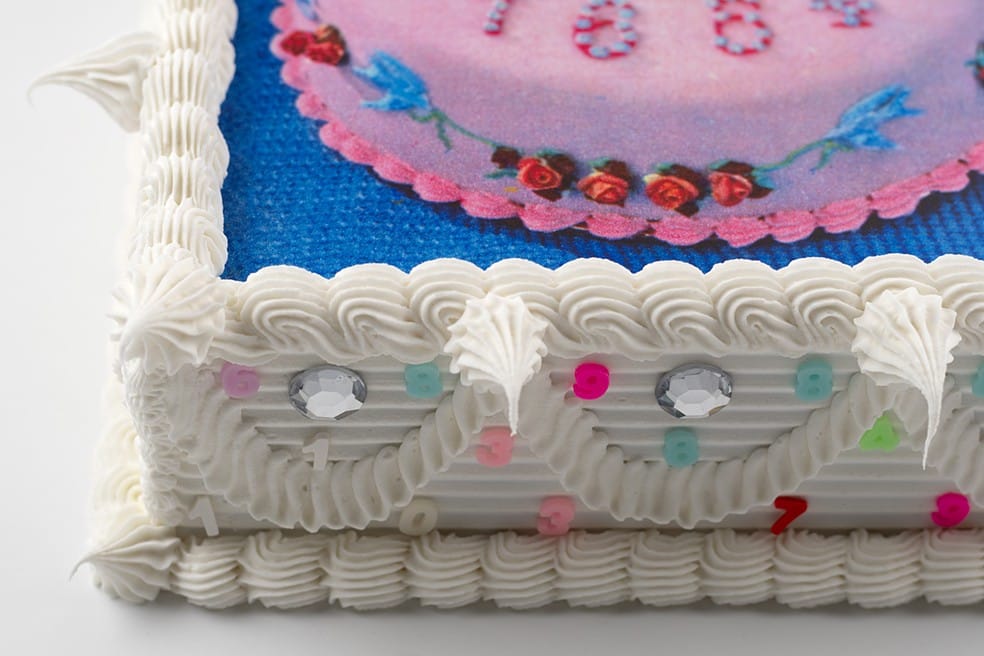
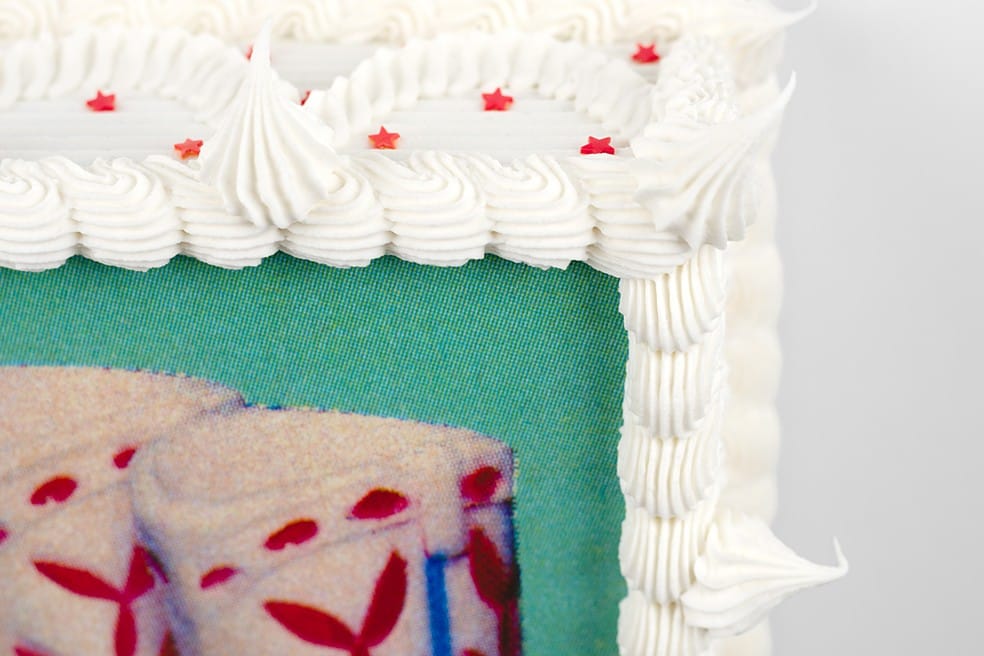
Based in Oakland, California, artist and educator Alexander Long works across sculpture, photography, video, and installation to investigate the slippery terrain between desire and perception. His practice is rooted in the everyday, but never content to leave it untouched. Instead, Long turns toward culturally loaded objects and images, store-bought cakes, commercial product photography, surfaces of excess and polish, to ask what they reveal about sincerity, artifice, and the systems that shape how we see.
If his work can be summed up in three words, they are: humorous, uncanny, desirable. That combination feels exact. There is wit in the way Long recontextualizes the familiar, but also tension, a careful destabilization of things that might otherwise go unnoticed. His work invites viewers into a space that feels recognizable at first glance, only to become stranger, more layered, the longer they stay with it.
Long describes his inspirations as rooted in the ways culture, economy, and environment shape perception. He is drawn to objects and images that already carry cultural weight, and uses them as material for deeper inquiry. In his hands, desire becomes more than attraction; it becomes a social language, a coded system, a site of contradiction. His intention is not simply to aestheticize these tensions, but to make them visible, to create work that feels both familiar and unsettling, and that encourages viewers to question what they are seeing.
That sensitivity to shifting meaning is also what drives his process. Long is interested in what happens when something mundane is displaced, reframed, or pushed just slightly out of alignment. He speaks about the fulfillment of making as both a lifelong necessity and a form of experimentation, seeing what happens when materials, or ideas, are asked to do something they perhaps should not. There is a spirit of testing in that approach, but also trust. Not every answer arrives immediately. Sometimes the work asks to be stayed with.
That ethos extends into the advice he offers emerging creatives, keep making, even when the work feels uncertain. Breakthroughs, he suggests, often come from remaining inside the process long enough for something unexpected to surface. Curiosity, especially when it leads into strange or difficult territory, is worth following. The most original work can emerge from exactly those moments of doubt.
A significant turning point in Long’s journey came with his solo show at Book & Job Gallery in San Francisco last year. He describes it as a moment that encouraged him to fully commit to becoming a full-time artist, to trust his vision, experiment more boldly, and move forward with greater conviction. It was not just a professional milestone, but a personal one, an affirmation that the work could hold its own terms.
Looking ahead, Long is expanding both form and atmosphere. He is currently developing new work that combines sculpture, video, and sound, while also exploring non-traditional exhibition spaces and more interactive modes of presentation. There is a clear interest in building experiences, not just objects, environments that invite reflection, immersion, and participation.
He is also curious about where the practice can move next. Video, sound, and performance remain areas he wants to push further, particularly through immersive installations that bring the viewer directly into the work. That instinct feels consistent with the larger arc of his practice, an interest not only in how meaning is made, but in how it is encountered physically, emotionally, and socially.
At the same time, Long remains clear-eyed about the broader creative industry around him. He notes that visibility and marketability can too often eclipse experimentation and slow thinking. For him, a healthier cultural landscape would make more room for artists to take risks, to fail, and to focus less on constant production than on the depth and resonance of the work itself.
That perspective returns us to the centre of Long’s practice: attention. Attention to objects. Attention to images. Attention to the uneasy space where desire and critique meet. In a culture saturated with surfaces, Alexander Long’s work does not ask us merely to look. It asks us to look again.