
Working in photorealism, Icelandic painter Helena Margrét Jónsdóttir creates meticulously rendered scenes where flowers bloom beneath layers of glass, plastic, and ice, and spiders weave their way into compositions of striking beauty. At first glance, her paintings feel familiar, lush, detailed still lifes. But look a little closer, and there’s an uneasy tension between preservation and decay beneath those polished surfaces. Instead of isolating her subjects, she builds rich environments tied together by symbolism, texture, and atmosphere. She doesn’t do straightforward beauty; instead, she lets the desirable and the unsettling sit right next to each other. “I aim to create works that tell a story through visual connections, textures and subjects," she says. "My paintings deal with desirability and fragility, the appealing and the unpleasant, combined with attempted preservations of fleeting pleasures.”
Those contrasts come from a deeply personal, eclectic mix of inspirations. Her visual language draws from Baroque still lifes, funeral arrangements, glossy wine ads, her mother’s handbag collection, and "general anxiety." They also sit alongside something far less glamorous: a lifelong, intense fear of spiders. Rather than avoiding that discomfort, Helena leaned into it, turning it into one of her most recognizable motifs. “I’m fascinated with them both because of my own terrible phobia of them and also because most people, even if they think spiders are disgusting, they still admire the webs," she explains. "The spider is a creator of something beautiful, intricate and delicate.” Summing up her work in just three words, she describes it simply as “delicate, fragile and detailed.”
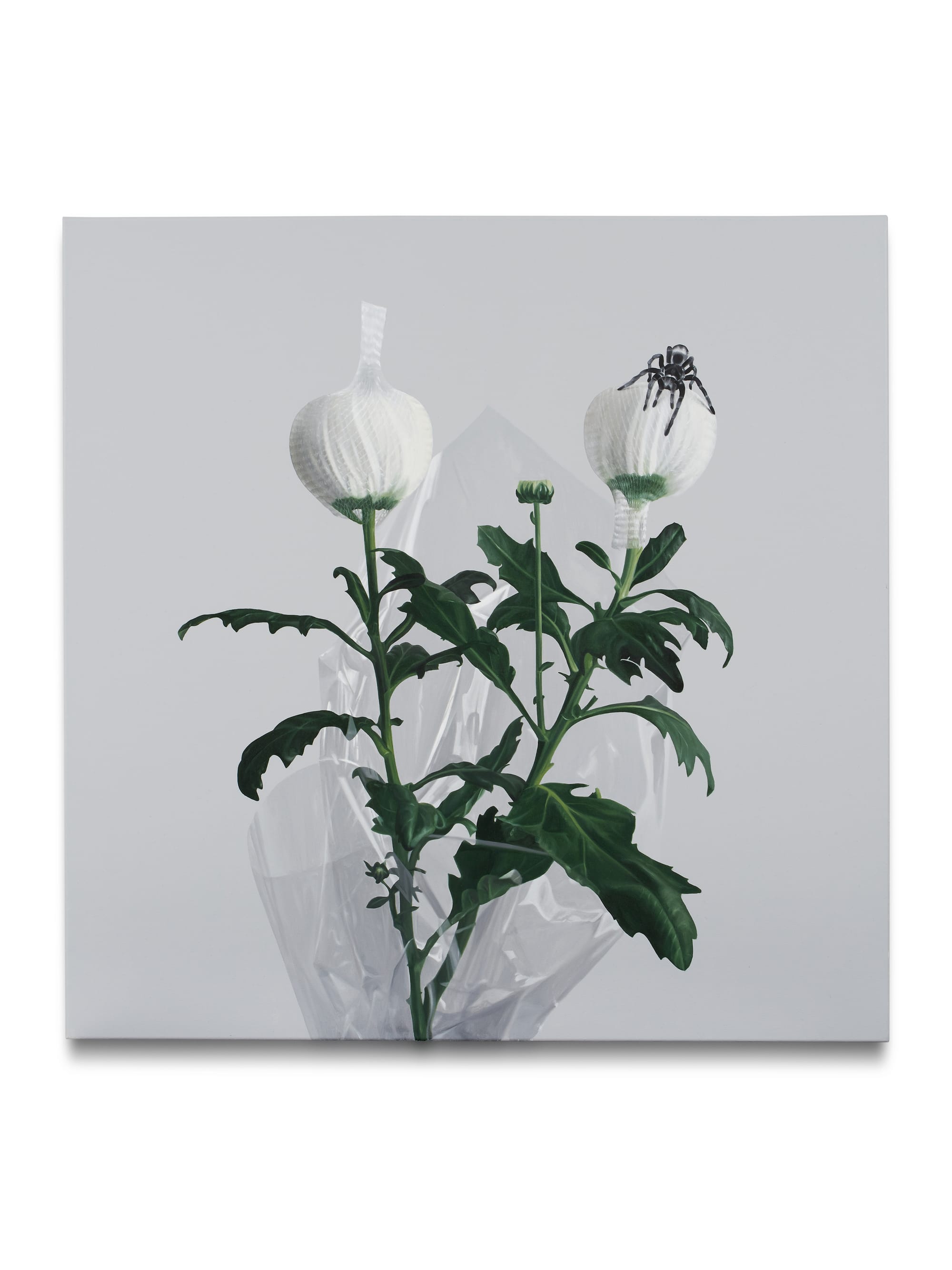
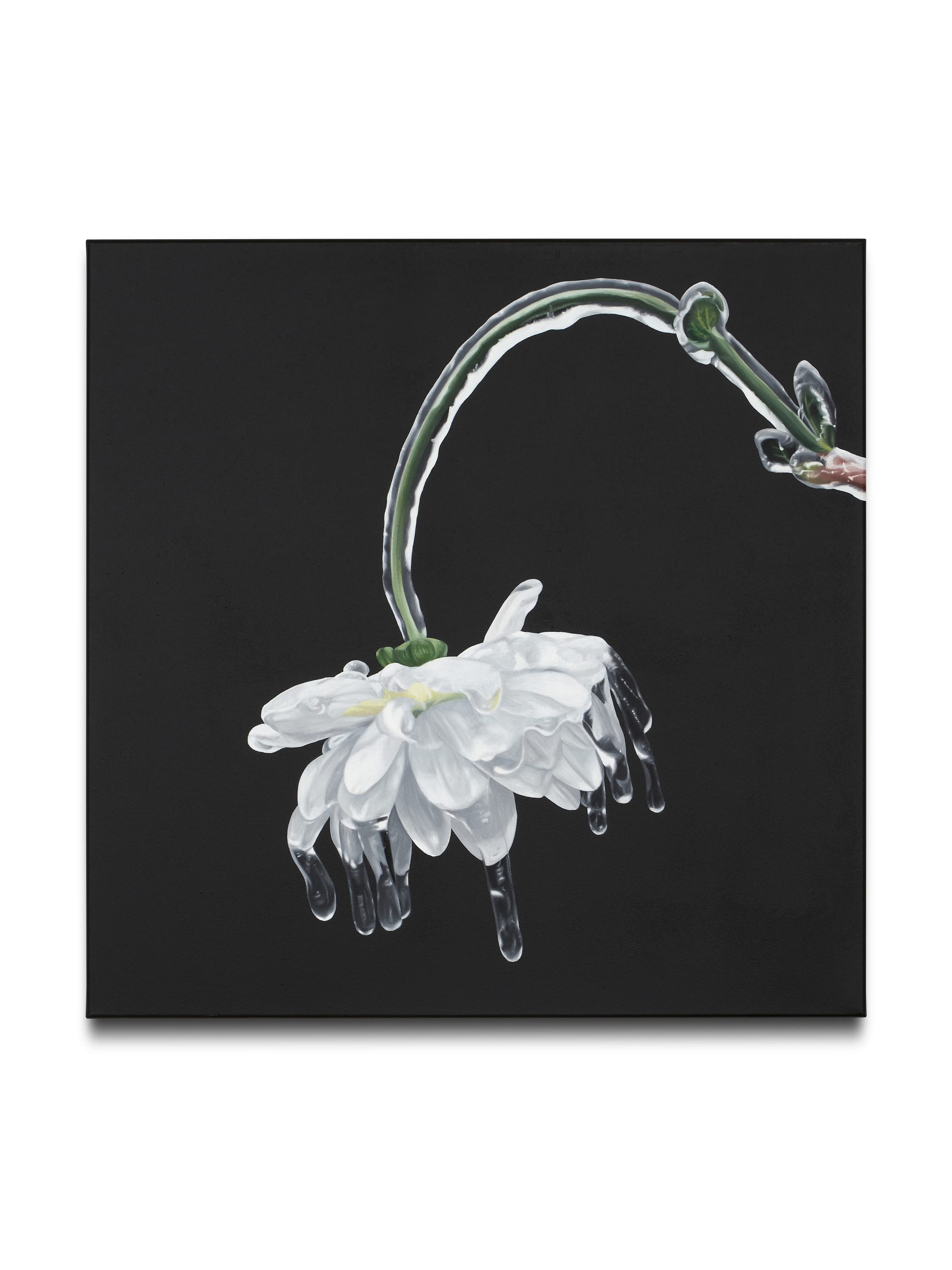
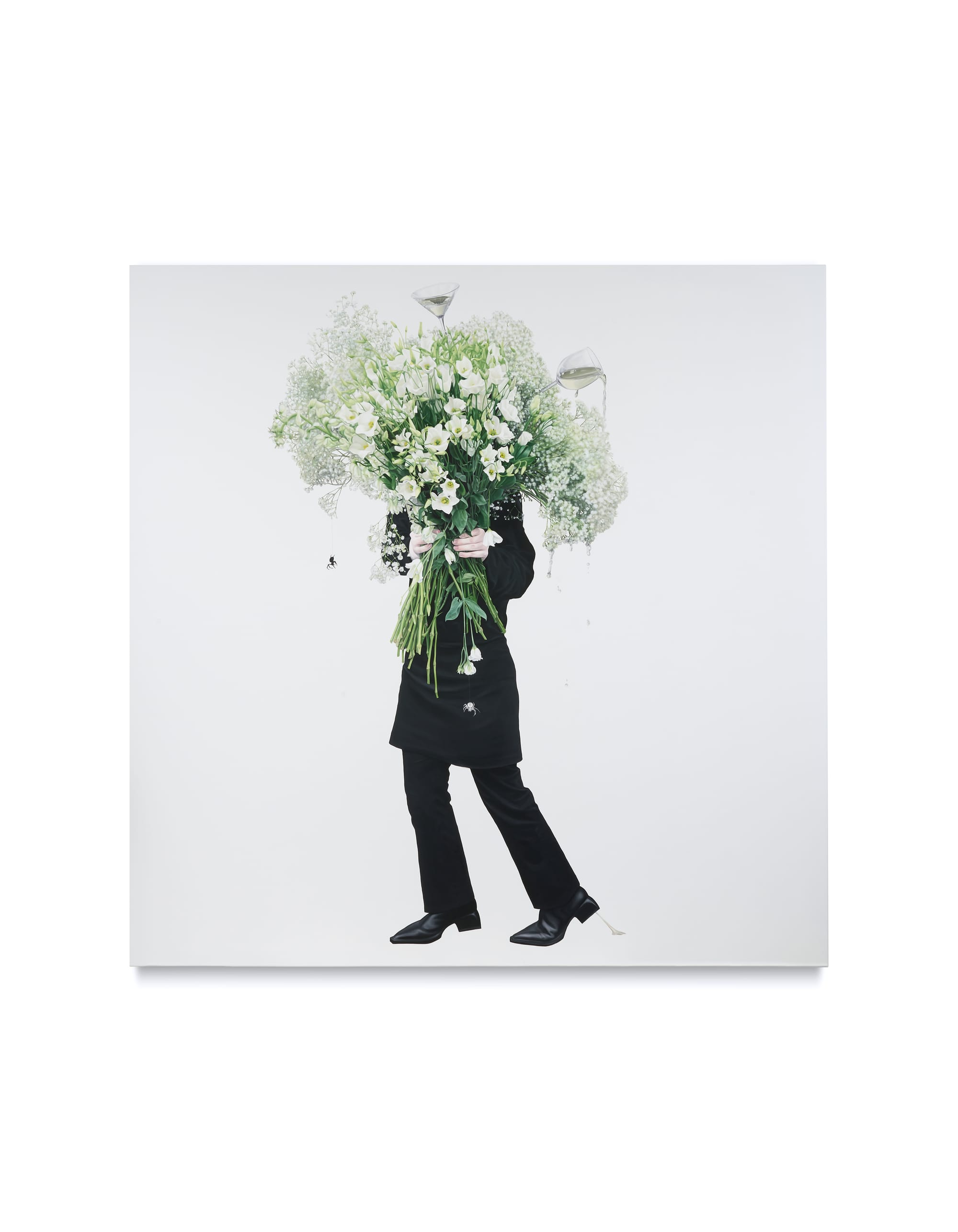
The flowers carry a similar paradox. Historically, flowers in paintings represent beauty and permanence. Helena pairs them with materials meant to protect, like glass, plastic, and ice, only to show that the very act of trying to preserve something can end up suffocating, distorting, or destroying it. “By painting them you preserve them, they bloom forever on the canvas," she says. "I like to pair them with other materials that, like the painting, also aim to preserve, like glass, plastic and ice. These see-through elements obstruct the flowers, the plastic suffocates them and they wilt in the ice. By attempting to preserve the flowers, you ruin them.”
Her commitment to photorealism is as much about the process as the final look, often soundtracked by the music of Haruomi Hosono in her studio. In an era where images are generated and forgotten in seconds, Helena finds value in slowing down. “I am fascinated by the craftsmanship of realism painting, the meticulousness and the time that goes into it,” she says. “It is always part of the work, the time… Making things slowly that are meant to last a long time feels almost radical.” That dedication has also earned wider recognition, with Helena recently receiving the 2025 Icelandic Art Prize Motivational Award. That patience took time to learn, and Helena admits one of her biggest challenges has been learning to trust her instinct over logic. “I only have intuition to go on and often logic only gets in the way,” she reflects.
For years, she actually avoided painting flowers entirely, worried the subject was too clichéd. But when she finally gave herself permission to try, she found the exact opposite. “When I painted my first flower I learned that it’s possible to make it your own and I also understood why they are such a trope, they are a delight to paint," she says. "And it was such a relief getting a break from the spiders once in a while.” This isolated, deeply focused way of working mirrors how she spent her childhood. "I used to spend a lot of time as a kid by myself creating stories, drawing, painting, playing," she notes. "Painting is one of the few visual mediums that you can do totally by yourself... you don’t need anything but yourself, imagination, skill and time to bring a vision to life. Any regrets? Not yet!”
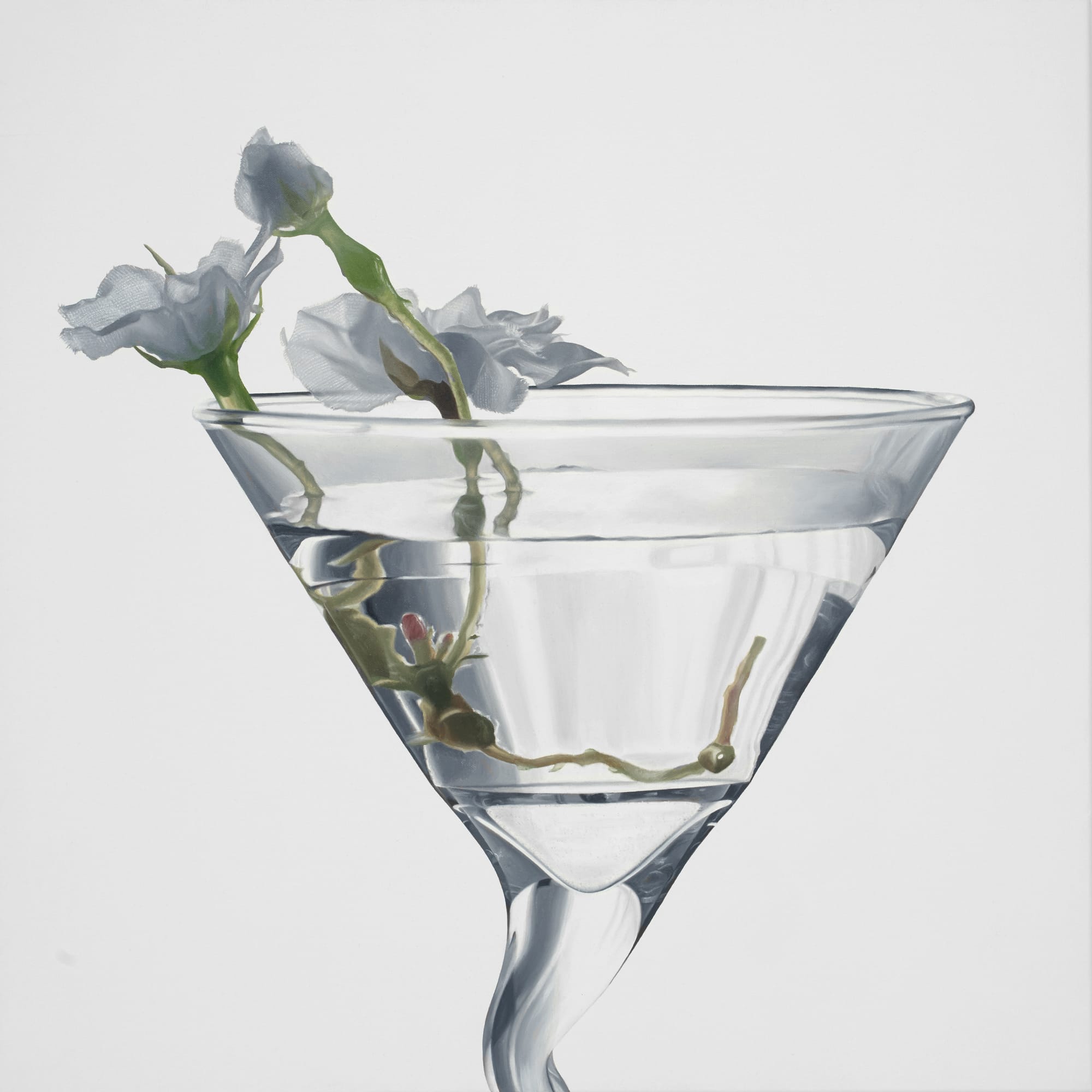
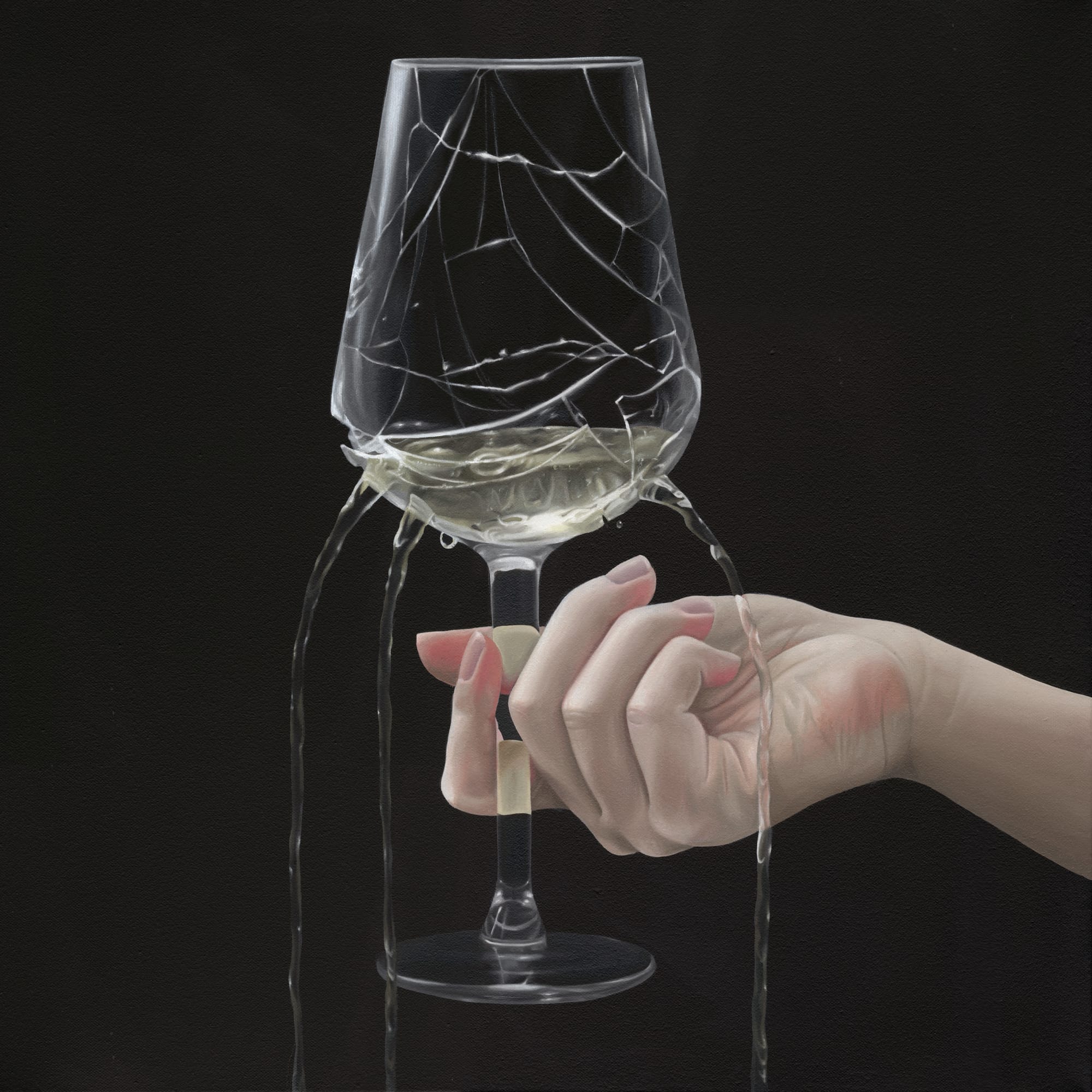
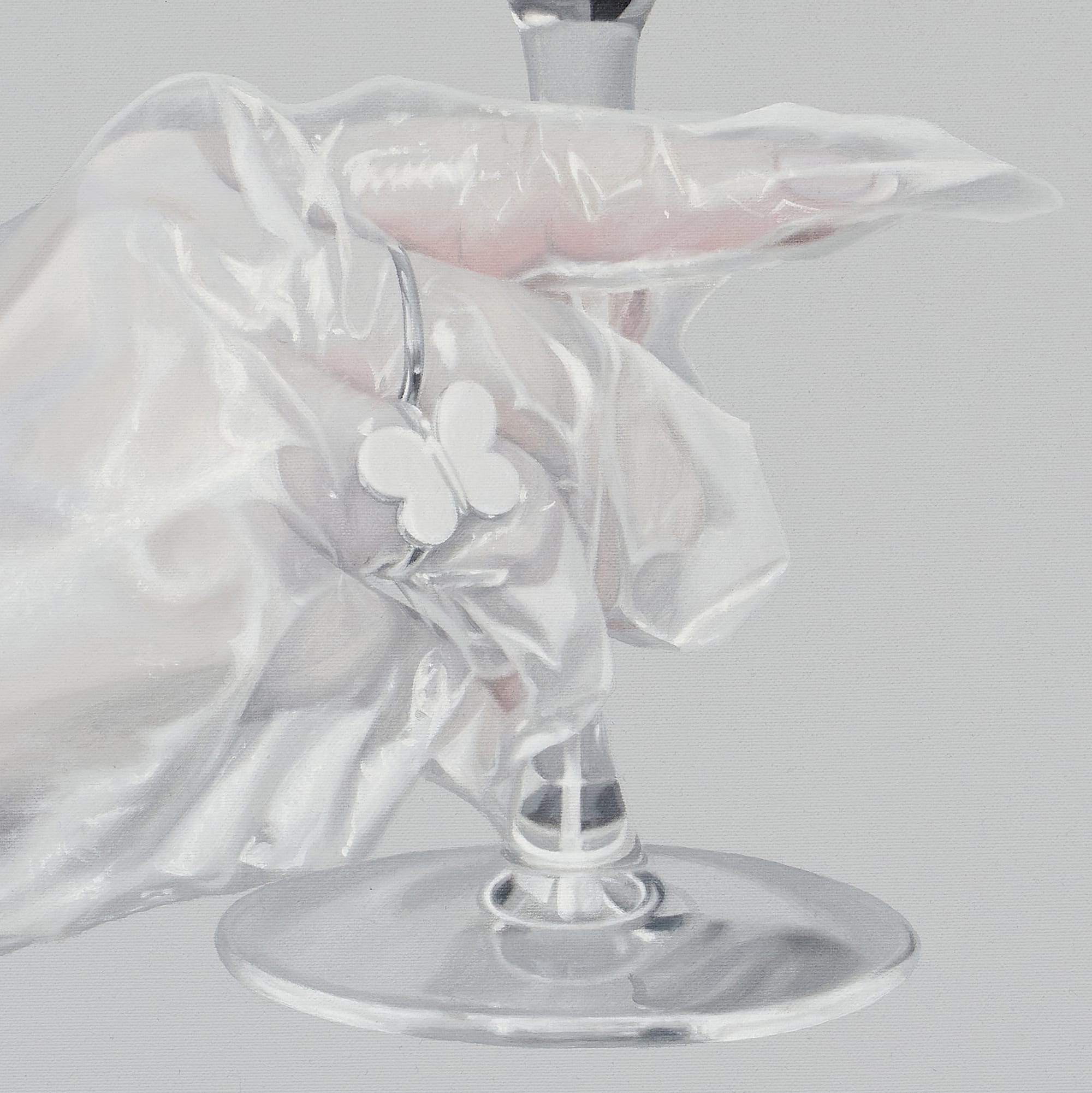
Looking ahead, Helena is always searching for the next challenge, drawing ongoing inspiration from fellow creatives like Eggert Pétursson, the iconic Icelandic painter of flora. Right now, she’s gearing up to paint lace for an upcoming work. “I’ve never done it and it might be a great challenge and look beautiful or absolutely defeat me,” she admits. She’s also stepping behind the camera, using a camcorder to document her process and expand her storytelling into filmmaking. Whether she’s rendering the vein of a petal or the geometry of a web, Helena reminds us that beauty is rarely simple. It’s fragile, contradictory, and fleeting, but maybe that’s exactly why we try so hard to hold onto it.


